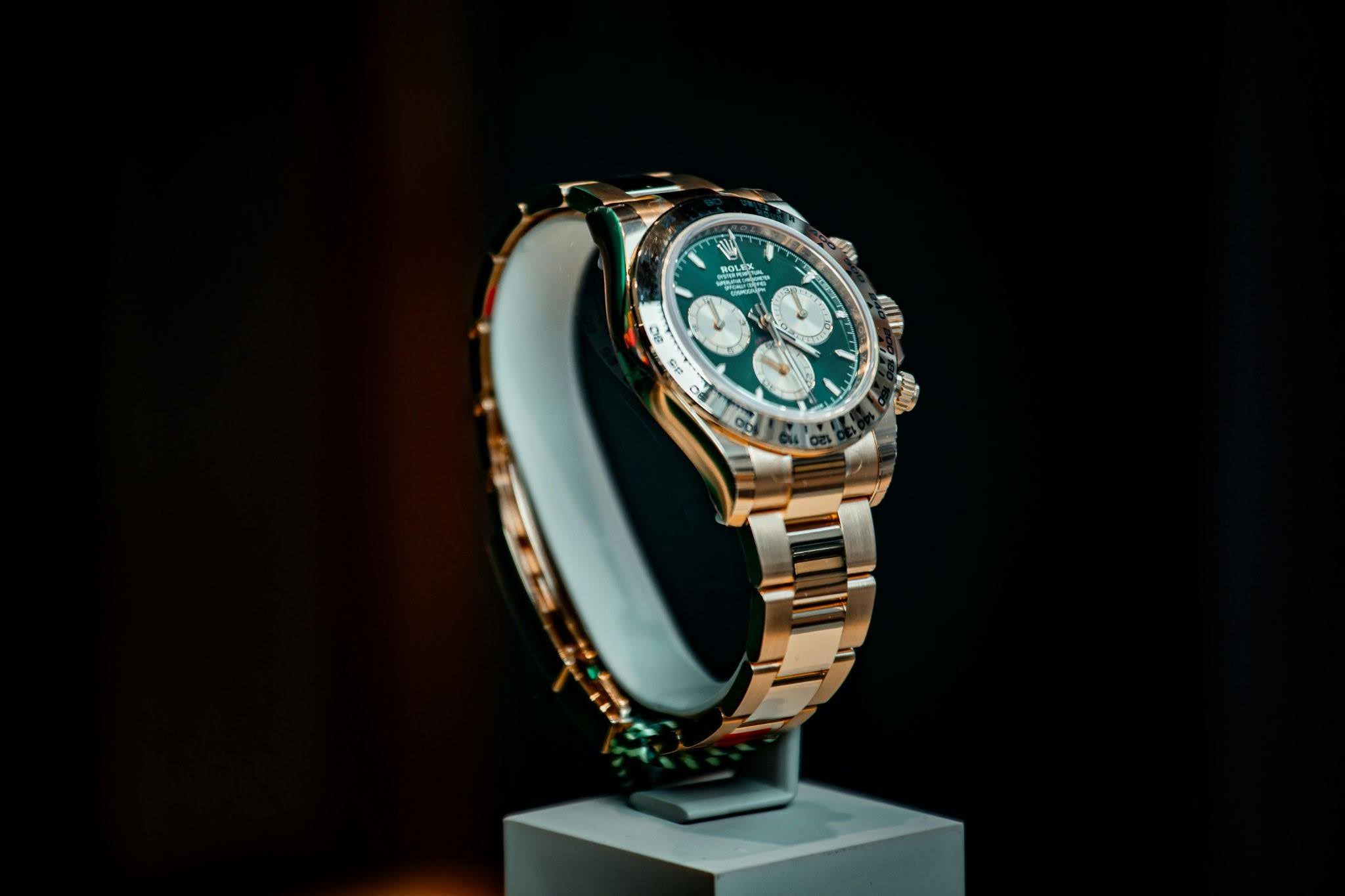
At $30,000, you can buy a steel sports watch with a robust automatic movement and a multi-year waitlist. You can also buy a hand-finished mechanical caliber watch from a smaller Saxon or Vallée de Joux manufacture with no waitlist at all. Both qualify as luxury. Only the second qualifies as haute horology.
So what is haute horology, exactly? The term — French for “high watchmaking” — refers to a tier of mechanical watches defined by movement architecture, hand-finishing, complication integration, and adherence to standards most consumers never verify directly. The Fondation de la Haute Horlogerie, founded in Geneva in 2005, frames it in its White Paper on Fine Watchmaking as “the symbiosis of the watchmaker’s craft with the applied arts.” Therefore a watch can sell at $30,000 without meeting any of those criteria.
The Easy Test Most Watches Fail
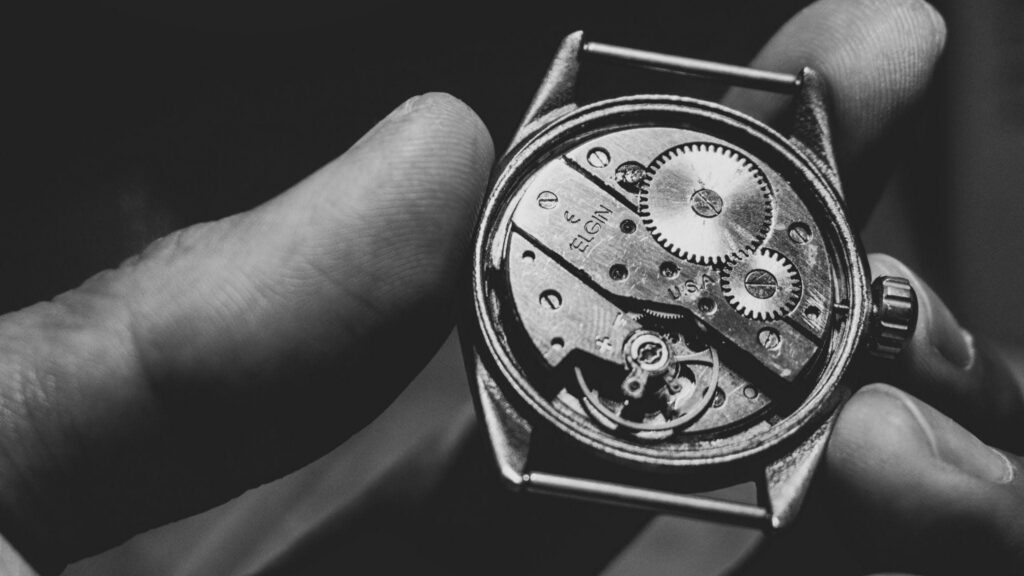
A vintage Elgin caliber. American industrial watchmaking built movements like this for accuracy and serviceability.
When you open the watch back and it is a modified ETA or Sellita ébauche with a branded rotor, you’re looking at a luxury watch — finished, possibly regulated, but not haute horology. If the bridges show hand-executed anglage — interior angles bevelled by hand and then polished to mirror — the calculus changes. A skilled finisher takes roughly six to eight hours per bridge for that work alone. These types of details and the cost of a skilled watchmaker do not make it into the marketing materials.
Brands working below that threshold may still be excellent — Rolex builds movements engineered for decades of service — but they don’t compete in the same category. To discover how those finishing standards translate into which watches become iconic over time, see Haute Horology: What Makes a Luxury Watch Truly Iconic.
Where Regions Show Their Hand
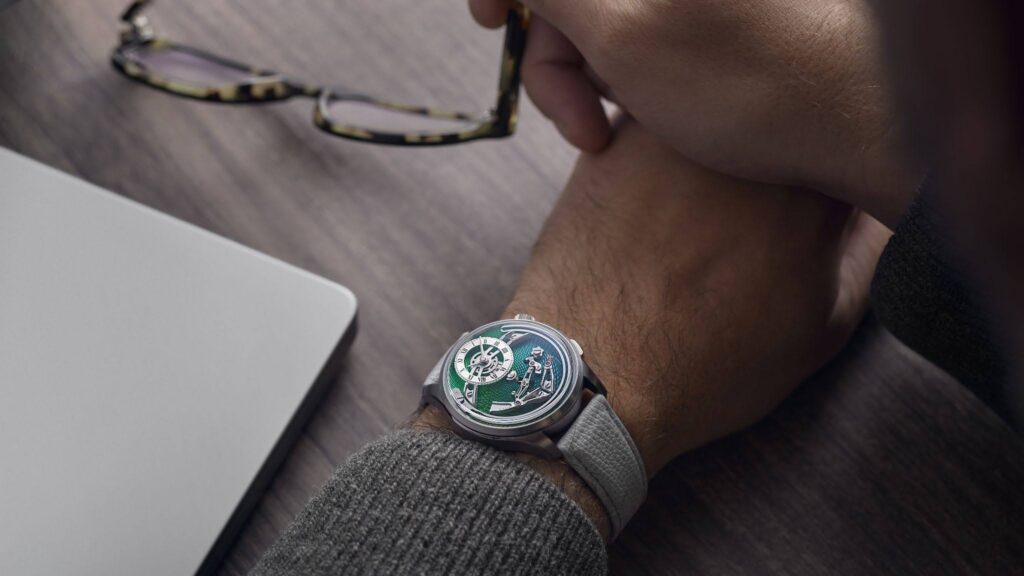
Glashütte, in Saxony, developed the three-quarter plate as a structural choice in the 19th century, and both A. Lange & Söhne and Glashütte Original still build movements around it — a single plate covering most of the going train, hand-engraved on the balance cock, that constrains assembly differently than a Swiss-style bridge layout. In Japan, Grand Seiko’s Zaratsu polishing — named for the Japanese pronunciation of Sallaz, the German lapping-machine maker whose equipment Seiko acquired in the 1950s — produces distortion-free flat surfaces on case sides that automated equipment can’t reliably replicate. Independent makers work to their own thresholds: Philippe Dufour finishes the Simplicity by hand, largely alone, to a standard widely cited within the trade as the contemporary benchmark; F.P. Journe produces movements in solid 18k rose gold; MB&F builds three-dimensional kinetic architecture around base calibers.
What the Trade Knows That Buyers Don’t
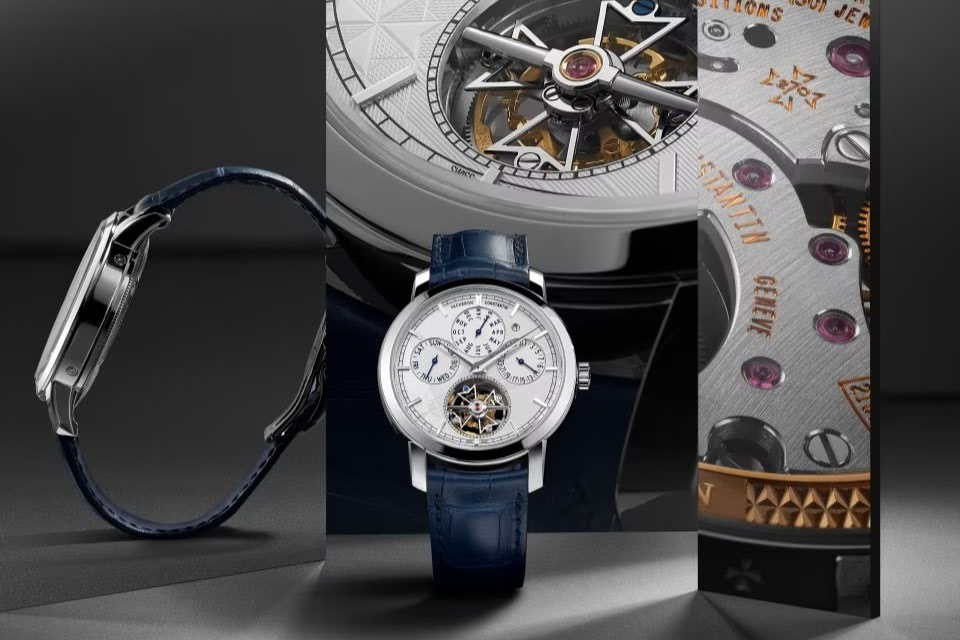
Vacheron Constantin Traditionnelle Tourbillon Perpetual Calendar (Ref. 6300T/000P-H056).
Much of haute horology still sells at list price unlike the grey-market premiums for high demand watches that are referred to as Bruce Wayne’s or Pepsi’s. Original archive extracts and certificates of origin carry real weight on resale — a Vacheron Constantin with documented manufacture provenance often outperforms an identical reference without paperwork. And “haute horlogerie” itself is a trade descriptor, not a regulated term. Unfortunately no authority polices its use, which is why it appears in press releases for watches that wouldn’t survive a finisher’s loupe.
The Federation of the Swiss Watch Industry reported total exports of 26.0 billion Swiss francs (about $30 billion) in 2024, with mechanical timepieces accounting for roughly 86% of export value despite a smaller share of units shipped. The gap between volume and value is where haute horology lives — and where the term remains harder to define than to charge for.