Global consumer interest in buying pre-owned watches has roughly doubled since 2020, and Deloitte’s Swiss Watch Industry Insights projects the secondary market will reach the size of the primary one within the next decade. That trajectory has created a new generation of platforms and the question of which are the best platforms to buy and sell watches.
Authentication isn’t a feature. It’s the response to a market problem the economist George Akerlof formalized in his 1970 paper The Market for “Lemons”: “the cost of dishonesty … must include the loss incurred from driving legitimate business out of existence.” Pre-owned watches lived in exactly that condition for most of their history.
The Marketplace at Scale
Chrono24, founded in Karlsruhe, Germany in 2003, lists hundreds of thousands of watches from more than 3,000 professional dealers and tens of thousands of private sellers across 120 countries. A 1969 Omega Speedmaster ref. 145.022, an A. Lange & Söhne 1815 Up/Down from Munich, and a Grand Seiko SBGW from Tokyo are all searchable. The platform has added Trusted Checkout escrow and an Authenticity Guarantee, but the underlying model is still a connector: deeper inventory and lower friction
When the Platform Becomes the Dealer
The Chrono24 alternatives that have taken share aren’t marketplaces. Watchfinder & Co., founded in the UK in 2002 and acquired by Swiss luxury group Richemont in 2018, takes watches in, services them in its Maidstone workshops, and sells them directly to customers. Bezel, launched in Los Angeles in 2022, routes every watch through credentialed watchmakers at a central facility before shipping. The 1916 Company, formed in 2023 by combining WatchBox with Govberg, Radcliffe, and Hyde Park Jewelers, runs a dealer-trade model with stronger emphasis on collector-grade vintage and high-complication inventory.
These authenticated pre-owned watch sites typically price 8 to 15 percent above comparable dealer-direct figures. The mirror of that spread shows up on the seller’s side: consignment commissions of 15 to 20 percent are standard, which is why experienced sellers shop a watch to several platforms before agreeing to terms.
The Auction Tier
For vintage and high-complication pieces, the primary platforms are Phillips, Sotheby’s, and Christie’s. Phillips, under Aurel Bacs, set the public auction record for a wristwatch in 2017 with Paul Newman’s own Rolex Daytona ref. 6239 at $17.8 million. The cost most first-time bidders miss is the buyer’s premium currently at 27-29% on the entry tier at the major houses and may be unknown to a new buyer. For example a $40,000 Pre Owned Rolex Daytona after the hammer falls settles closer to $51,500 once the premium and applicable are applied
What “Papers” Actually Costs
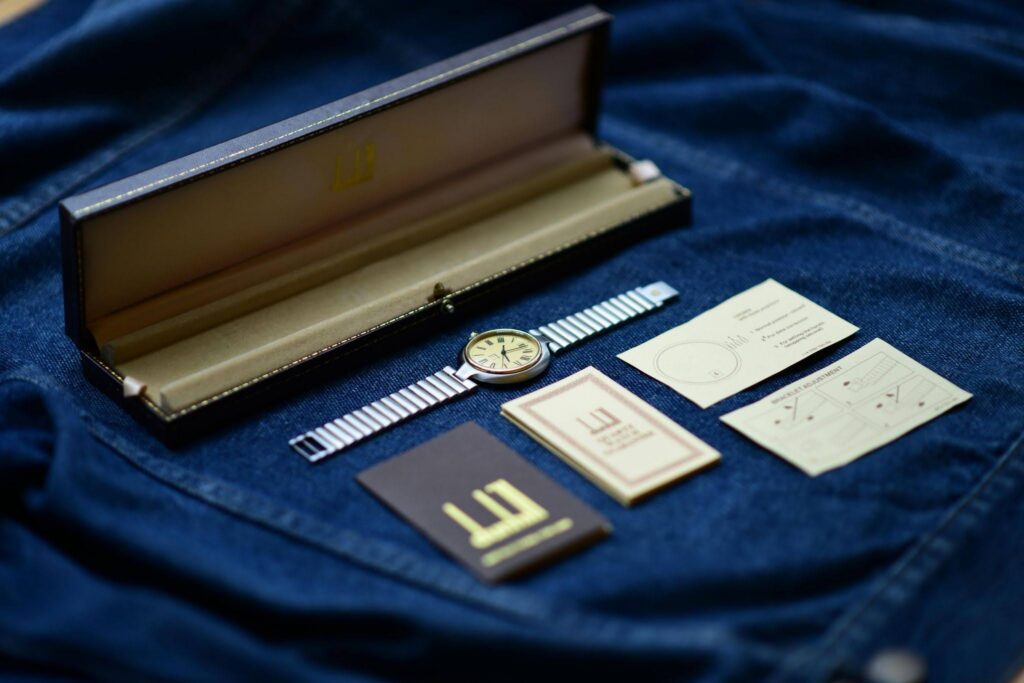
The phrase “full set” (original box, warranty card, instruction manual, hangtag, and service history) increases the price of a modern Rolex Submariner or Patek Philippe Nautilus by roughly 20 to 30 percent against the same reference sold bare. Service receipts from authorized centers carry particular weight; warranty cards have been forged for years, but a paper trail tied to a specific case number is harder to fake.
Post-2008 Rolex also carries a laser-engraved crown at the six o’clock position on the inner crystal and a coded engraving around the rehaut, the inner ring framing the dial. The verification chain for those references now affects resale liquidity more than mechanical condition. At the opposite end, late-production references still carrying their original protective stickers command a small premium for the same reason; the polish hasn’t been touched.
The category will keep splitting along the line of who holds the risk. As authentication scales and gets cheaper for the platforms that have built it, the spread between marketplace and authenticated-dealer pricing will widen, and the question of who carries the verification cost will increasingly decide where serious money moves.