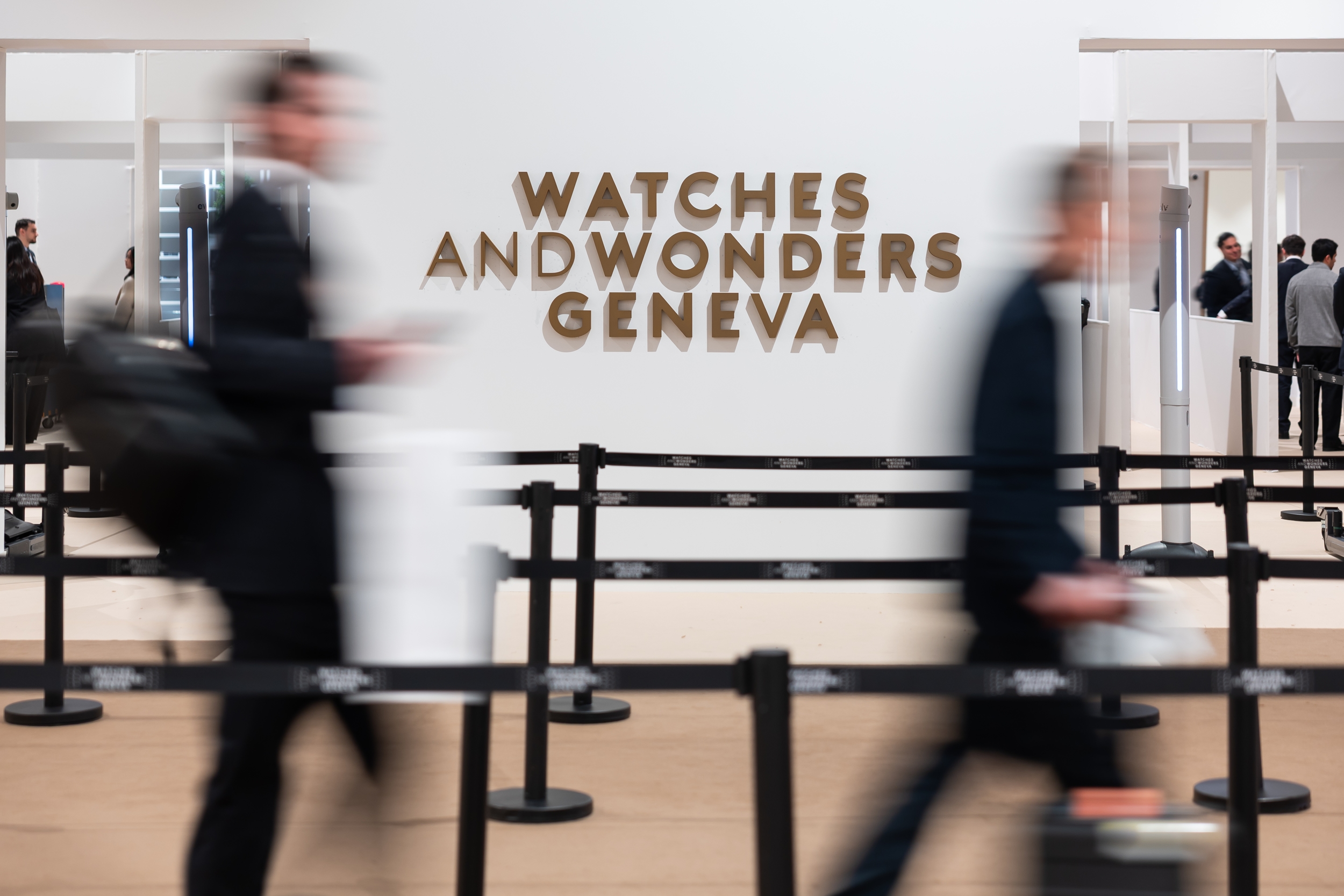
For one week in April, Hall 6 at Palexpo turns into the gravitational center of the watch industry. Watches and Wonders Geneva 2026 ran from April 14 through 20, with a record 65 brands exhibiting and two anniversaries setting the tone: 100 years of the Rolex Oyster and 50 years of the Patek Philippe Nautilus. Headline launches arrived alongside a quieter shift in case sizes, a new industry certification, and a public-weekend crowd large enough to reshape what the fair is for.
From Two Fairs to One
The watch industry used to have two big trade shows, not one. The Salon International de la Haute Horlogerie —SIHH, founded in 1991 by Cartier and other Richemont-owned Maisons — ran in Geneva every January and was invitation-only. Baselworld, the larger and older fair, opened in late March and hosted Rolex, Patek Philippe, the Swatch Group, and most of the rest of the industry. Brands picked one or, in some cases, exhibited at both.Then early 2020 happened. SIHH had just rebranded as Watches and Wonders, COVID forced both fairs to cancel, and within weeks Rolex, Patek Philippe, Chanel, Chopard and Tudor announced they were leaving Baselworld permanently. The Basel fair collapsed soon after. By 2022, Rolex, Richemont and Patek Philippe had founded the Watches and Wonders Geneva Foundation to run what was now the only major fair left — which is why a single week in April carries the weight that two fairs used to share.
Two Anniversaries, Two Strategies
Rolex used the centennial of the Oyster — patented in 1926 as the first commercially successful waterproof case — to refresh its catalog. The 2026 Daytona arrived in steel with a white grand feu enamel dial. The Day-Date 40 introduced Jubilee Gold, a new proprietary alloy. The Yacht-Master II returned with a redesigned dial and a simplified pusher mechanism in place of the Ring Command bezel.
Patek Philippe Ref. 958G-001 — the white-gold Nautilus desk clock unveiled at Watches and Wonders Geneva 2026.
Patek Philippe took the opposite approach for the Nautilus 50th. Instead of a new wristwatch, the brand released the Ref. 958G-001 — a white-gold Nautilus desk clock, 50.65mm, limited to 100 pieces. The horizontally embossed dial translates the porthole-derived case onto a desktop format no one expected. Patek also revived its alarm complication with the new 5322.
Smaller Cases, Sharper Focus
The clearest trend at Watches and Wonders 2026 wasn’t a single release but a recalibration of proportion. After more than a decade of 40mm to 43mm men’s watches, the new center of gravity sits between 36mm and 39mm. The Bulgari Octo Finissimo 37 captured the shift in a single reference: an ultra-thin minute repeater in a smaller case, presented as the natural form of the design rather than a women’s variant.
Cartier’s Privé Crash Skeleton, limited to 150 pieces, returned the asymmetric 1967 case in a contemporary skeletonized format. The Tortue and Baignoire returned in revised proportions. Tudor’s Black Bay Ceramic finally added a fully ceramic bracelet at $7,725 light, scratch-resistant, COSC and METAS certified.
A New Certification, Quietly Introduced

The COSC used the fair to unveil a new full-watch certification protocol. The traditional COSC test evaluates a movement in isolation, across multiple positions and temperatures, before it’s cased. The new protocol adds wear simulation, magnetism resistance, and power reserve verification on the finished, cased watch — closer to how a watch performs on a wrist. Tudor’s Master Chronometer designation already covers this through METAS; the COSC update brings the older institution into parity.
What the Independents Brought to the Room
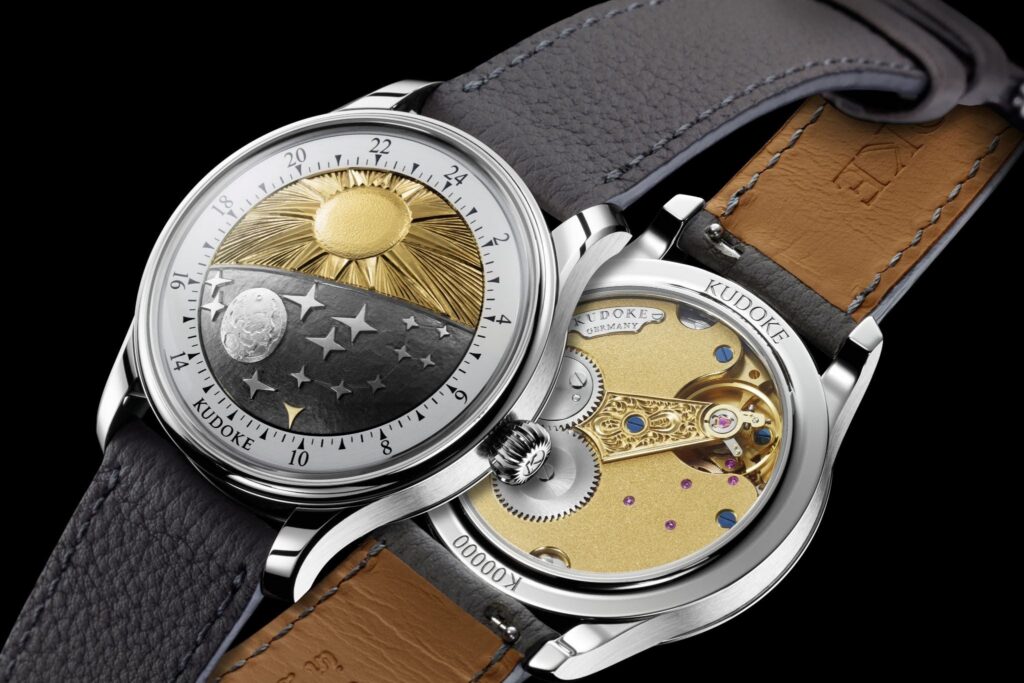
The fair’s Carré des Horlogers — the section dedicated to independent watchmakers — anchored the technical conversation as much as the headliners did. Chiming complications had a strong year: Armin Strom’s Minute Repeater Resonance 12:59 First Edition combined striking with twin-balance resonance, MB&F and H. Moser & Cie. continued to occupy the experimental edge, and Angelus introduced a quarter-striking Tinkler 1958 that reopened a price tier most independents had abandoned.
The foundation curates exhibitors rather than selling floor space. A Grand Seiko Micro Artist Studio piece — the platinum, hand-engraved SBGZ011 “Mystic Waterfall”, carved to evoke the Tateshina Waterfall — gets the same considered viewing as a new Rolex.
Sixty Thousand Visitors and the Public Weekend
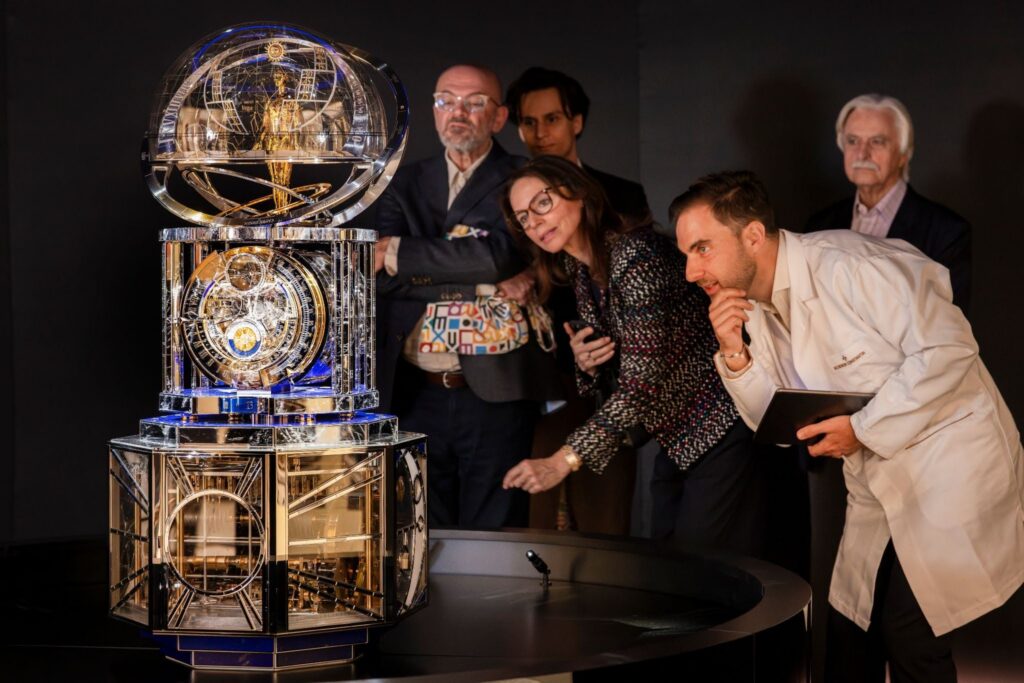
The 2026 edition closed with nearly 60,000 unique visitors, 25,000 public-day tickets, and 1,750 journalists accredited — a 9% jump on 2025. The economic historian David Landes, in Revolution in Time, argues that “it is the mechanical clock that made possible, for better or worse, a civilization attentive to the passage of time, hence to productivity and performance.” A fair this size now serves both halves of that legacy at once.
The Montreux Jazz Club’s pop-up programming sold out every night. The Wake Up! exhibition borrowed alarm clocks and timepieces from the Musée d’Art et d’Histoire de Genève. None of that existed at SIHH.
The watches that hold up from a given year are rarely the loudest releases. They surface inside conversations and second-day debriefs, in the booths visitors return to twice. Geneva in April rewards the second look — and the public weekend is where that now happens.
Photography: Watches and Wonders Geneva Media Center.
Video footage: patek.com.