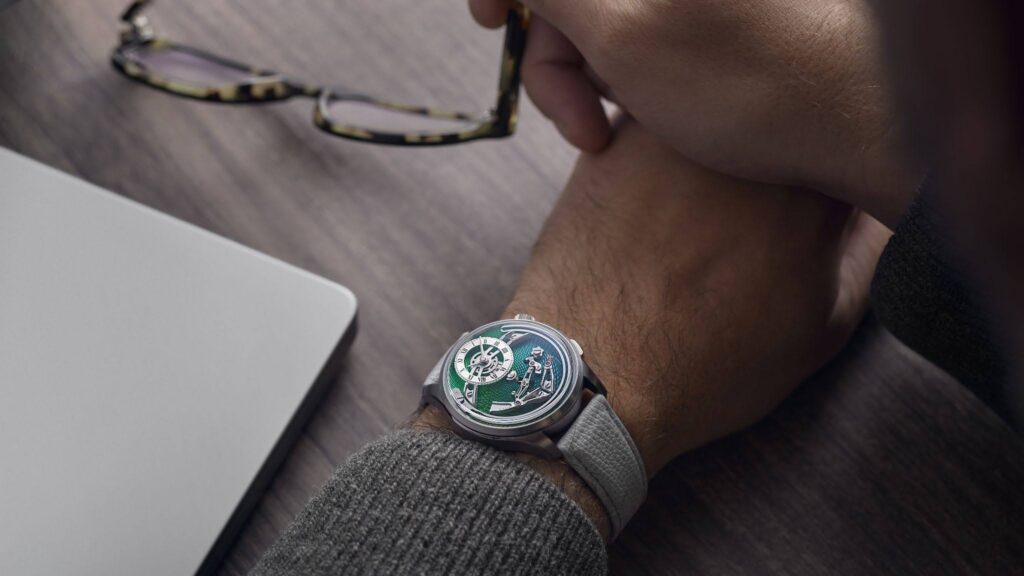
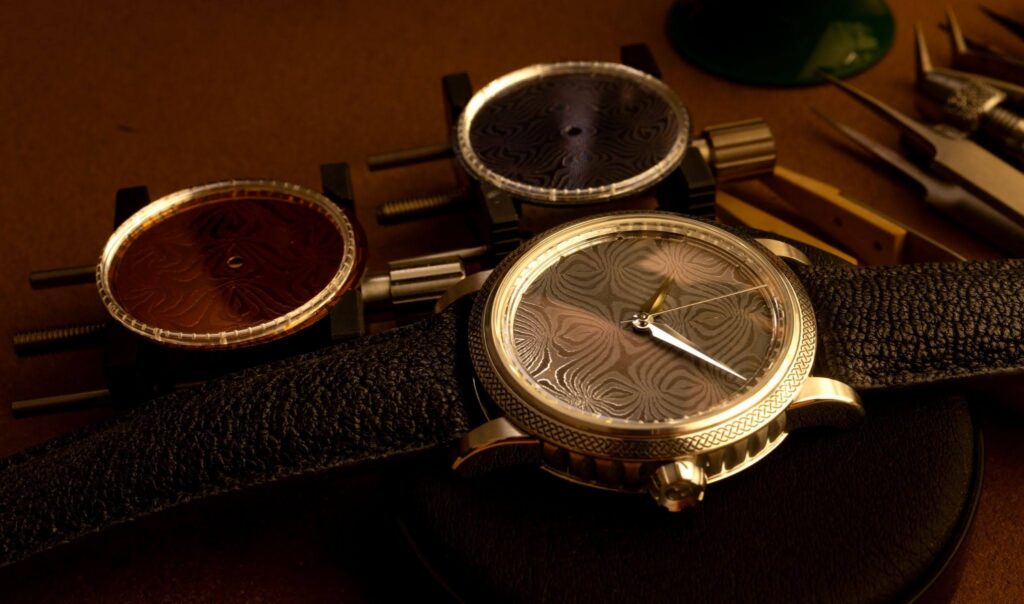
Haute horology doesn’t announce itself with logos or price tags alone—it reveals itself in the hand-finished bevels on a bridge you’ll rarely see, in complications that required months to assemble, in movements where a single misaligned screw slot can undo a year of work. Think of it as the haute couture of watchmaking: meticulously crafted, deliberately excessive, and unapologetically expensive. The term ‘haute horology’ surfaced in the late 1970s when Swiss manufacturers needed language to separate their mechanical timepieces from the flood of quartz watches eroding the market, but the distinction runs deeper than marketing.
George Daniels established the principle in his book Watchmaking: “The watch must be original in design and conception and, when completed, beautiful in appearance.” That standard collapses function and aesthetics into a single requirement, where mechanical ingenuity exists inseparably from visual refinement. In other words: it has to work beautifully and look beautiful working.
When Standards Replace Subjectivity
The Fondation de la Haute Horlogerie—a Geneva-based organization established in 2005 to promote fine watchmaking and establish industry standards—spent three years evaluating 86 brands across seven criteria: research and development, design, DNA, distribution, brand perception, communication, and training. The evaluation led to formal guidelines in its White Paper on Fine Watchmaking, ultimately naming 64 brands that met the threshold. A minimum score of 6 out of 10 was required; the highest mark achieved was 9.1.
That exercise wasn’t about prestige alone but about defining standards in an industry where luxury watch craftsmanship operates without uniform regulation. Movement finishing separates competent work from haute horology more decisively than complications do, though both matter when considered together rather than in isolation.
When Invisible Work Defines Value
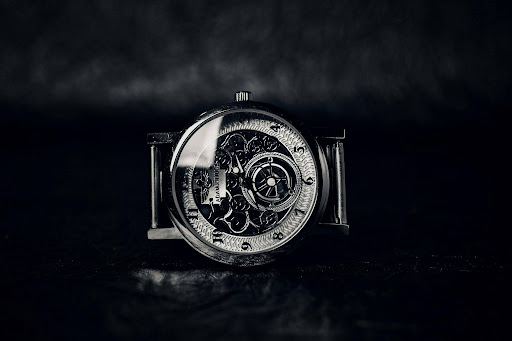
Hand-executed anglage, black polish on steel that appears nearly reflective when tilted, Geneva stripes laid with precision across bridges—these techniques require dozens of hours per component and appear on parts hidden behind case backs where most buyers will never look. The logic isn’t aesthetic indulgence but technical integrity, the same reason a tourbillon cage must balance within fractions of a gram or a perpetual calendar must account for leap years without manual adjustment for centuries.
Patek Philippe produces roughly 60,000 watches annually, A. Lange & Söhne assembles each watch twice—once to confirm tolerances, then again after every component receives individual finishing. Vacheron Constantin still employs guilloche engravers whose techniques descend from 18th-century methods. These aren’t gestures toward heritage but operational choices that affect how a watch functions under stress, how its escapement engages after decades of service, whether its calendar advances cleanly at midnight.
Swiss watchmaking accounts for 95% of export production despite shipping only 16 million watches in 2021 compared to China’s 430 million, but mechanical watches represent 85% of Swiss export value while comprising just 37% of unit volume. That gap is where fine watchmaking lives.
When Brands Set Their Own Bar
Industry certifications like the Geneva Seal or COSC chronometer designation signal adherence to finishing or timekeeping standards, but iconic watch brands often implement proprietary marks that exceed those baselines. The Patek Philippe Seal guarantees rate accuracy between -3 and +2 seconds per day along with specific finishing requirements, stricter than COSC’s -4/+6 second range. Qualité Fleurier evaluates movement, decoration, precision, and function across multiple positions. These aren’t awards but production thresholds applied before a watch leaves the manufacture, the difference between quality control and aspiration.
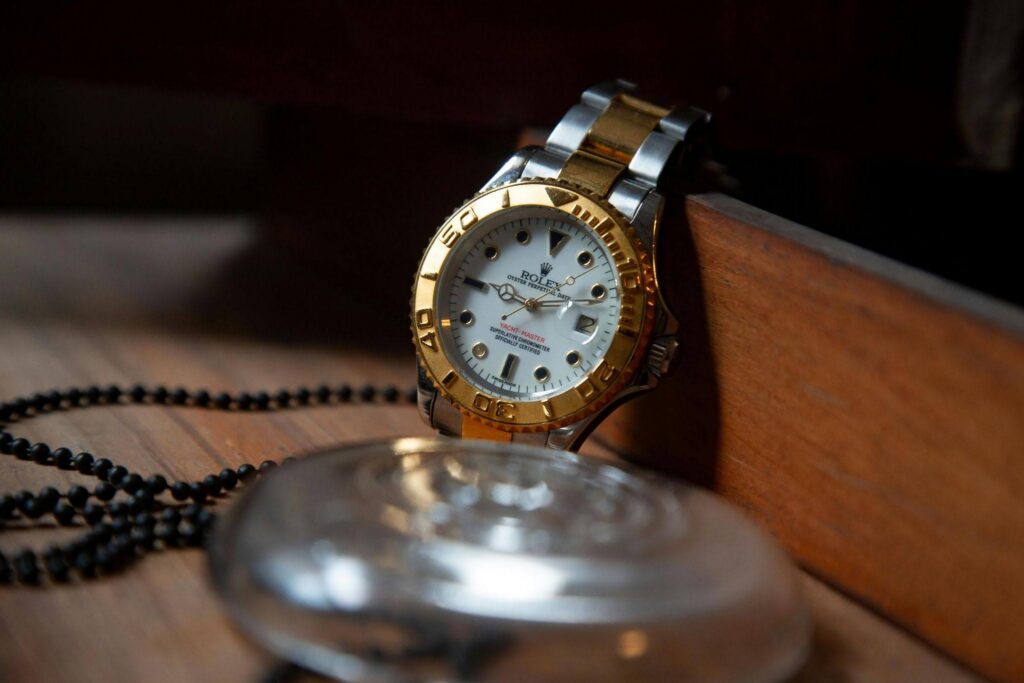
Rolex manufactures roughly a million watches per year to exacting tolerances with robust movements engineered for longevity, yet the brand typically falls outside haute horology definitions despite its quality and market dominance. The difference isn’t superiority but focus—Rolex prioritizes durability within accessible design, while haute horology emphasizes technical and artistic expression where mastery becomes visible under magnification.
When Design Outlasts Trends
The Jaeger-LeCoultre Reverso solved a functional problem in 1931 with a reversible case for polo players, then endured as an Art Deco icon. ThePatek Philippe Calatrava established proportions for dress watches in 1932 that still shape contemporary interpretations. These watches didn’t chase trends—they established parameters other manufacturers continue to reference, not from nostalgia but because the underlying design logic holds under examination.
These watches are deliberately more complex, more meticulous, more elaborate than necessary. That’s what makes them so hard to look away from. They’re benchmarks, not products—proof that the craft is still moving forward, even as the rest of the world checks the time on a phone.