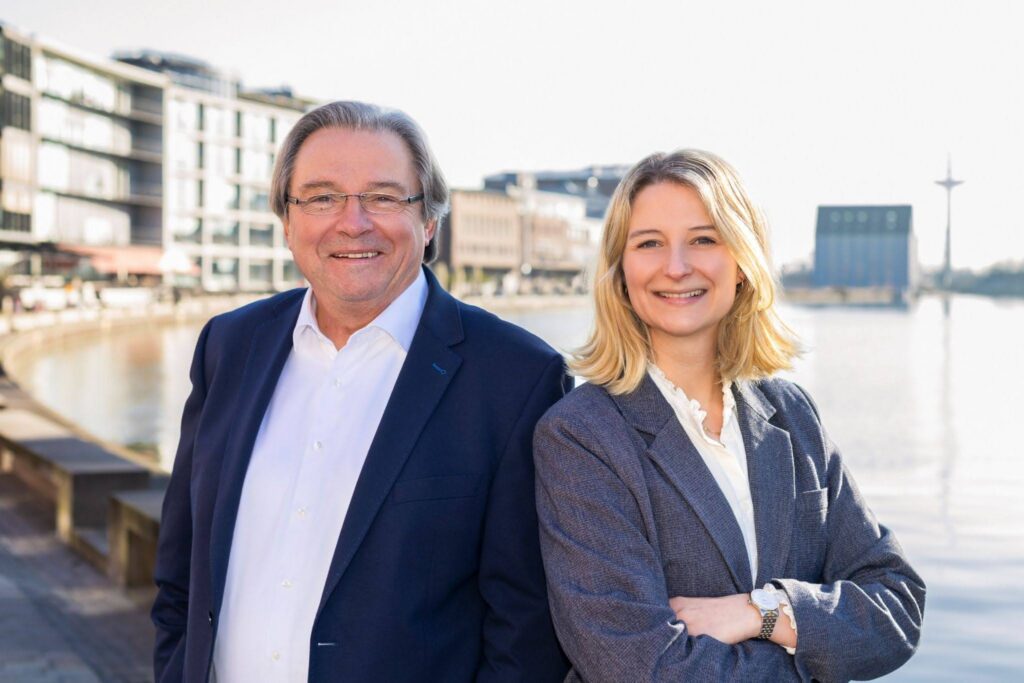
A husband, a wife, and a handful of watchmakers in a Saxon village (where every finishing step is done at the bench).
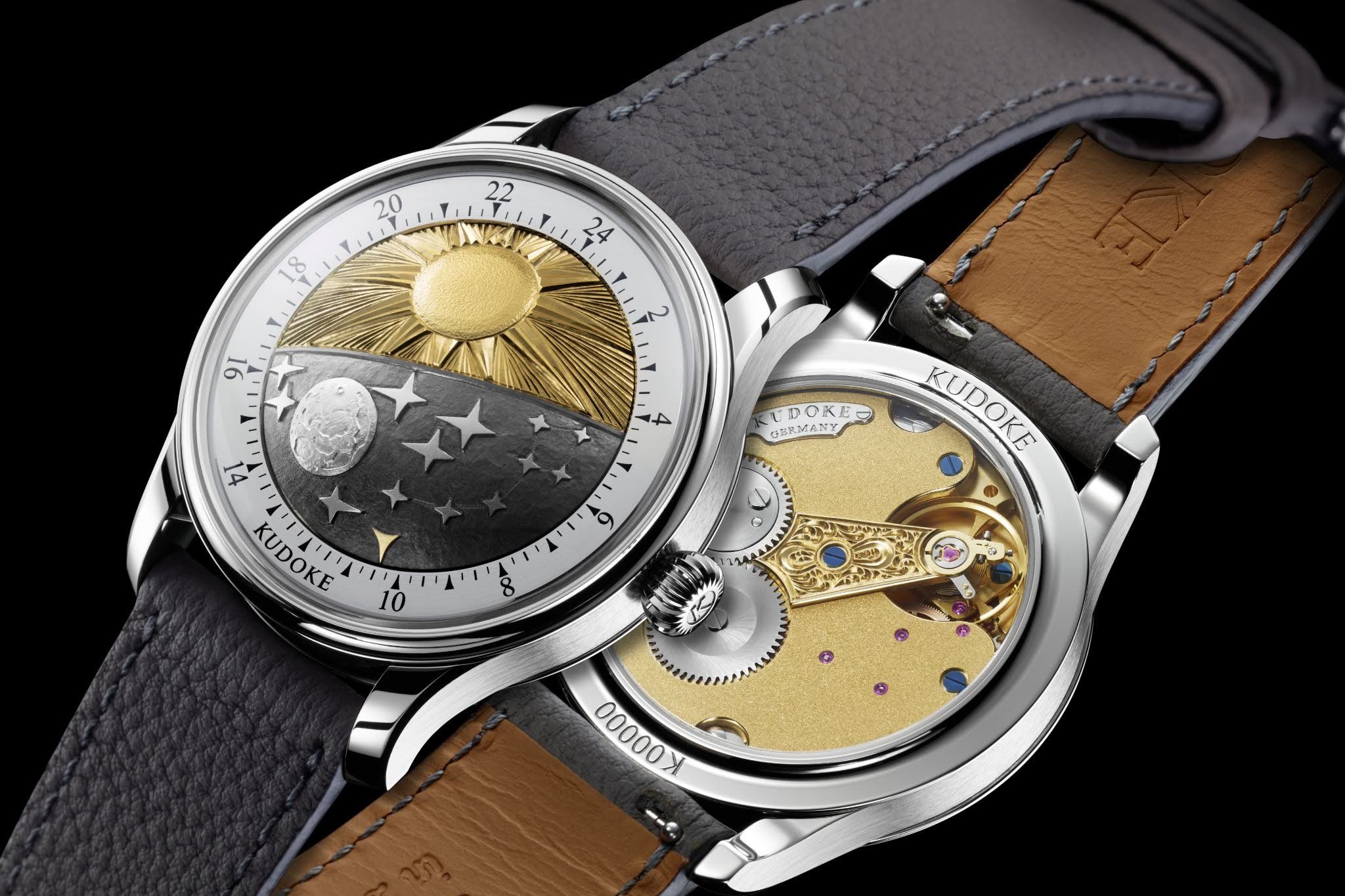
The KUDOKE 5 has no hands. Under a domed sapphire crystal, a disc of engraved sky turns once a day. One half is a gilded sun, rays cut in relief around a raised center. The other is night: a moon, a scatter of stars, the Little Bear among them.
Telling the time is simpler than it looks. A small gold triangle rides the night side and marks the hour against a 24-hour ring. Sun on top means noon. Night on top means midnight.
KUDOKE built that disc for this watch alone, and the 24-hour mechanism changed to carry it.
“Sometimes an idea starts as a purely artistic thought and only afterwards do I ask myself how it could possibly be constructed,” Stefan Kudoke told Watch Professor. “That dialogue between imagination and engineering is what keeps me curious.”
Most companies run that sentence backwards: A movement exists and a dial gets drawn to fit it. KUDOKE has stayed small enough to choose. Stefan leads the design and the watchmaking. Ev Kudoke, his wife and co-owner, runs the business as managing director.
Trained in Glashütte, Drawing on His Own Terms
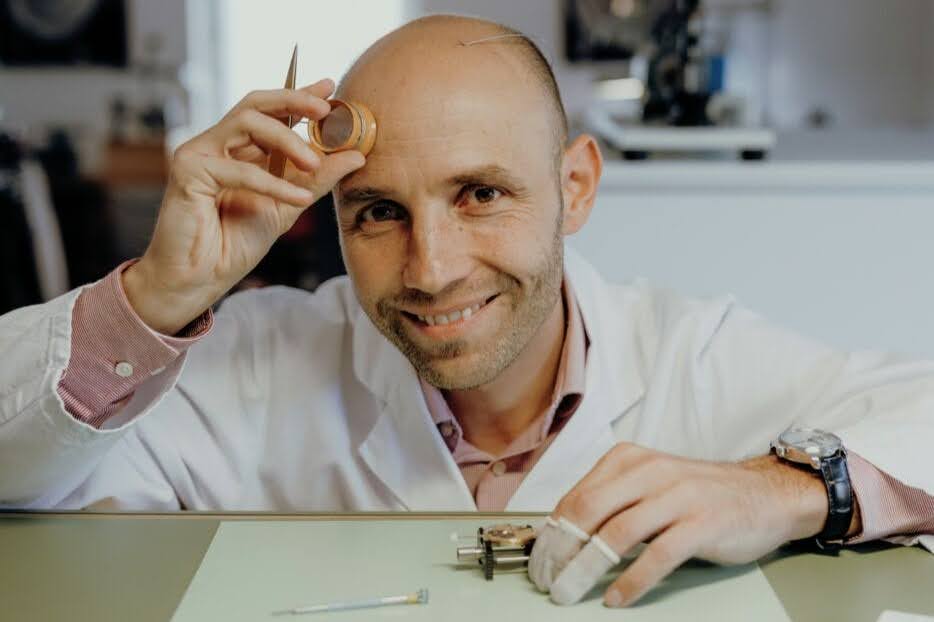
Stefan Kudoke made his name on hand-skeletonized art watches before the HANDwerk series existed.
Stefan Kudoke was born in 1978 in Frankfurt (Oder), with no watchmakers in the family. Two local craftsmen taught him the trade. He joined Glashütte Original’s studio for complications and prototypes, qualified as a master watchmaker at 22, then worked for Breguet and Blancpain in New York.
He was still a student when he told Ev he had a crazy idea and was going to make his own watches. That was 2004. KUDOKE became his full-time work in 2008.
Since 2023 it has run out of a purpose-built workshop in Weifa, Saxony, turning out roughly 200 watches a year. He joined the AHCI, the Swiss academy of independent watch and clockmakers, in 2021.
Saxony comes with a house style: three-quarter plate, restraint, engineering you’re meant to admire quietly. He learned it and then went his own way.
“Over the years, I have become even more confident in developing my own design language rather than following what the market expects from a German watchmaker,” he says.
The Disc That Grew Into a Dial
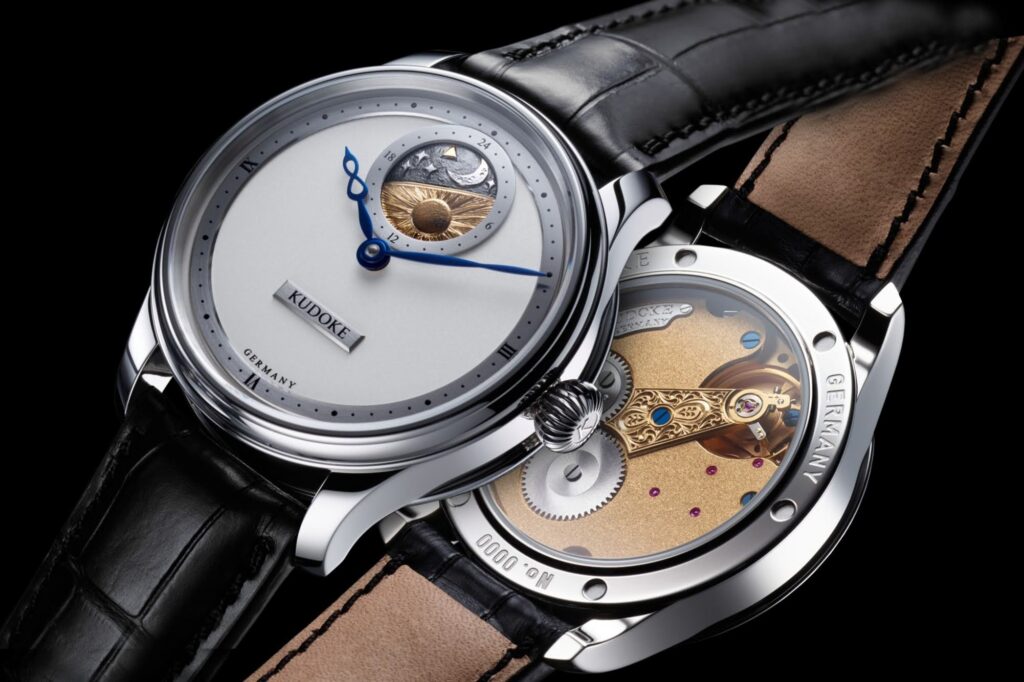
The KUDOKE 2 measures 39mm across, with the Kaliber 1-24H visible through a sapphire back.
That design language shows best in an idea that has been growing. On the KUDOKE 2, six years before the K5, it’s a small domed disc at 12 o’clock, marking day or night while the hands do the timekeeping. It’s a detail.
It’s also what won. The KUDOKE 2 took the Petite Aiguille at the Grand Prix d’Horlogerie de Genève in 2019, making Stefan the first German independent watchmaker to win it. Five years later, the KUDOKE 3 Salmon won the same category again. In between, he sat on the jury.
On the K5 the disc becomes the entire dial.
“A watch is not simply a technical object,” Stefan says. “It is a canvas where mechanics, engraving, finishing, proportion and three-dimensionality come together.”
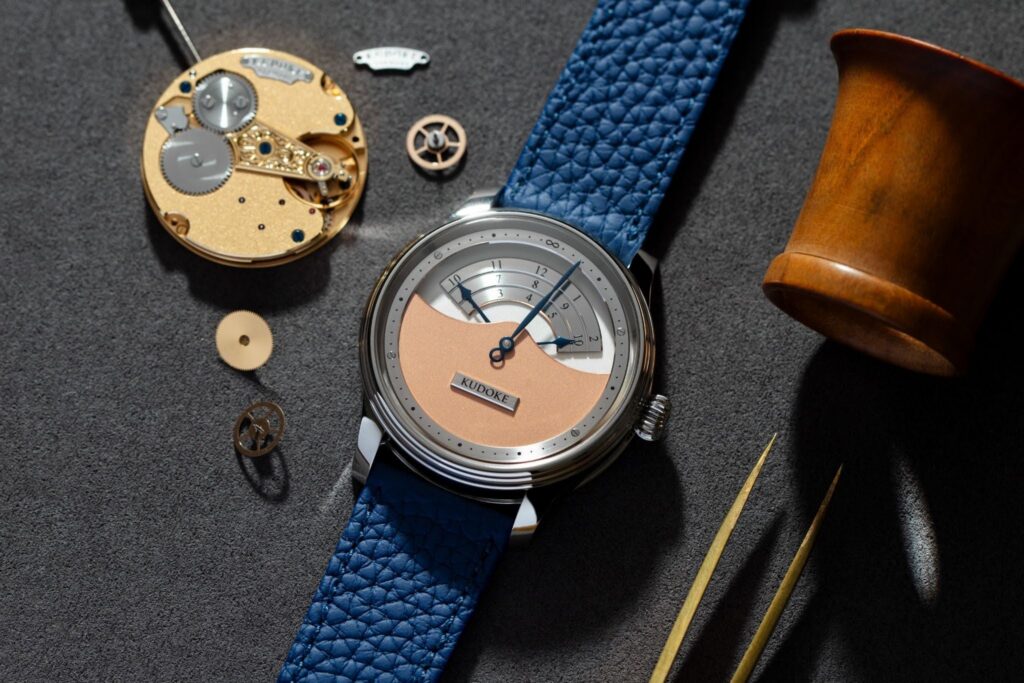
The KUDOKE 3 Salmon reads its hours from a three-armed hand crossing two stacked dials.
The K5’s canvas is the whole dial, and that’s where it gets difficult. Engraving it takes several days and the risk throughout is denting the metal. The weight created a problem the drawing never predicted. To carry it, the workshop fitted a ball bearing into the 24-hour mechanism for the first time, which reduces friction and needs no lubrication.
Underneath sits the hand-wound Kaliber 1, first introduced in 2018, now the mechanical foundation of thethe HANDwerk series. Its forms come from English pocket watches, the same source the first Glashütte watchmakers drew on.
Years earlier, he had bought such a movement and left it in a drawer. It surfaced again, in his telling, just as he began designing his own.
What he took from it shows through the caseback, in a broad frosted bridge. The movement runs 46 hours at 28,800 vibrations an hour.
Even the Hands Are Made by Hand
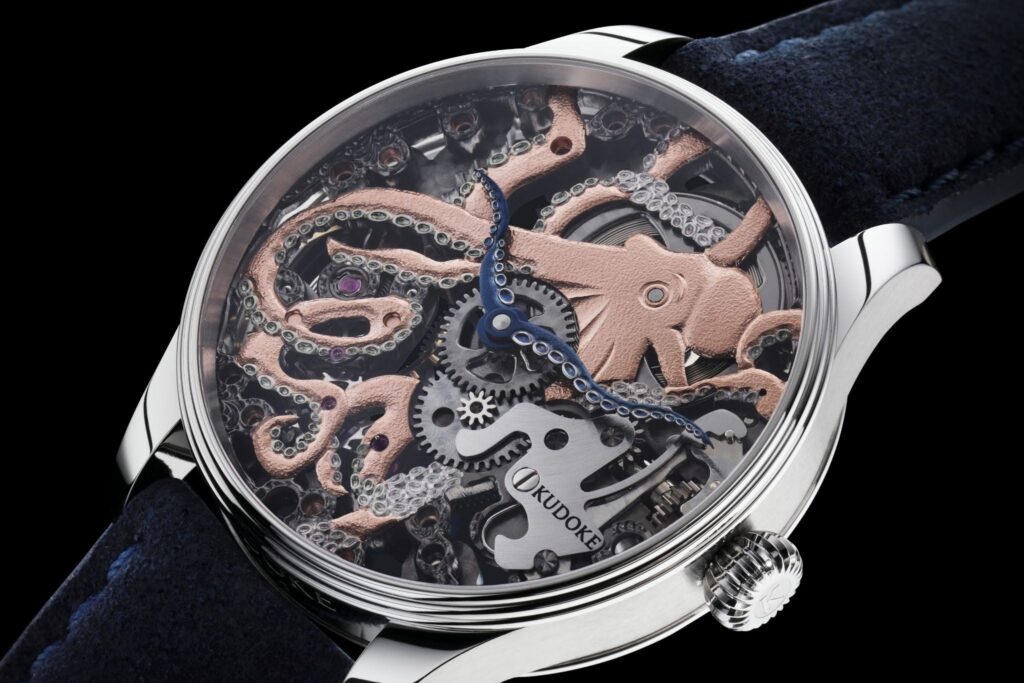
The octopus is cut from the movement itself, a technique Stefan Kudoke spent more than a decade refining.
A movement like that gets the admiration, but the hands get the hours.
“Even something as seemingly simple as a watch hand can require numerous individual operations,” Stefan says.
The KudOktopus, from the KUNSTwerk line, proves it. Its tentacle-shaped hands begin as flat steel and pass through engraving, polishing and heat bluing before they look like hands at all.
The dials are no quicker. This year’s tremblage finishes are built from thousands of graver strikes, creating a surface that shifts with the light.
Stefan looks for that same effort in other people’s watches. “I have never been a collector in the conventional sense,” he says. What catches him is personality: “watches where you can see an artistic idea rather than simply a technical achievement.” The name on the dial comes last.
“What makes me happiest is when a collector recognizes a KUDOKE immediately, not because of a logo, but because of its character,” he says.
Two Hundred a Year, and No Hurry
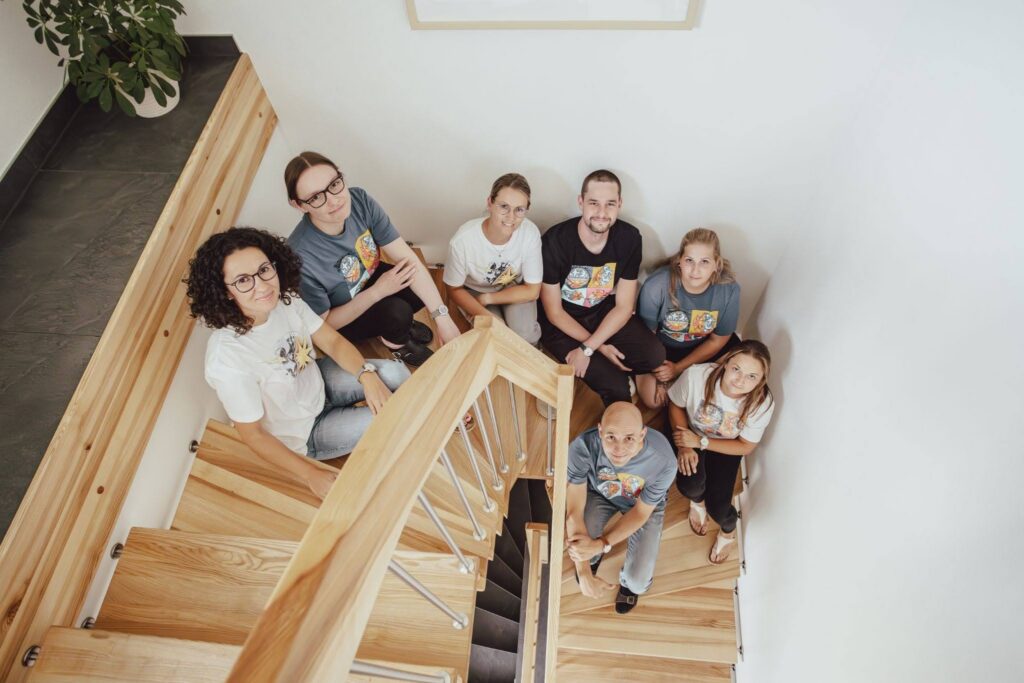
Ev and Stefan Kudoke with the workshop team in the Weifa manufactory.
The order book runs months ahead. The team has reached seven people, one at a time.
“We have grown our team step by step and at a pace that allows us to preserve the freedom and intimacy that make our work special,” Stefan says.
Plenty of independents have taken outside money to fund exactly that kind of growth. KUDOKE’s answer is a village, a small bench, and a number that hasn’t moved much.
“For me, watchmaking is where art and mechanics meet. I want every KUDOKE to carry something of the human hands and imagination that created it, not only in its engraving and finishing, but in the way the entire watch is conceived. We are a family business, and I see our collectors as part of that family: without their trust and enthusiasm, we would not have the freedom to live our dream and create watches in our own way.”
— Stefan Kudoke, founder and master watchmaker
He keeps developing new ideas. In Weifa, the workshop turns them into watches.
KUDOKE is based in Weifa, Germany. The collection is shown at kudoke.eu, and watches are sold through authorized dealers and directly from the brand.
Images courtesy of KUDOKE.